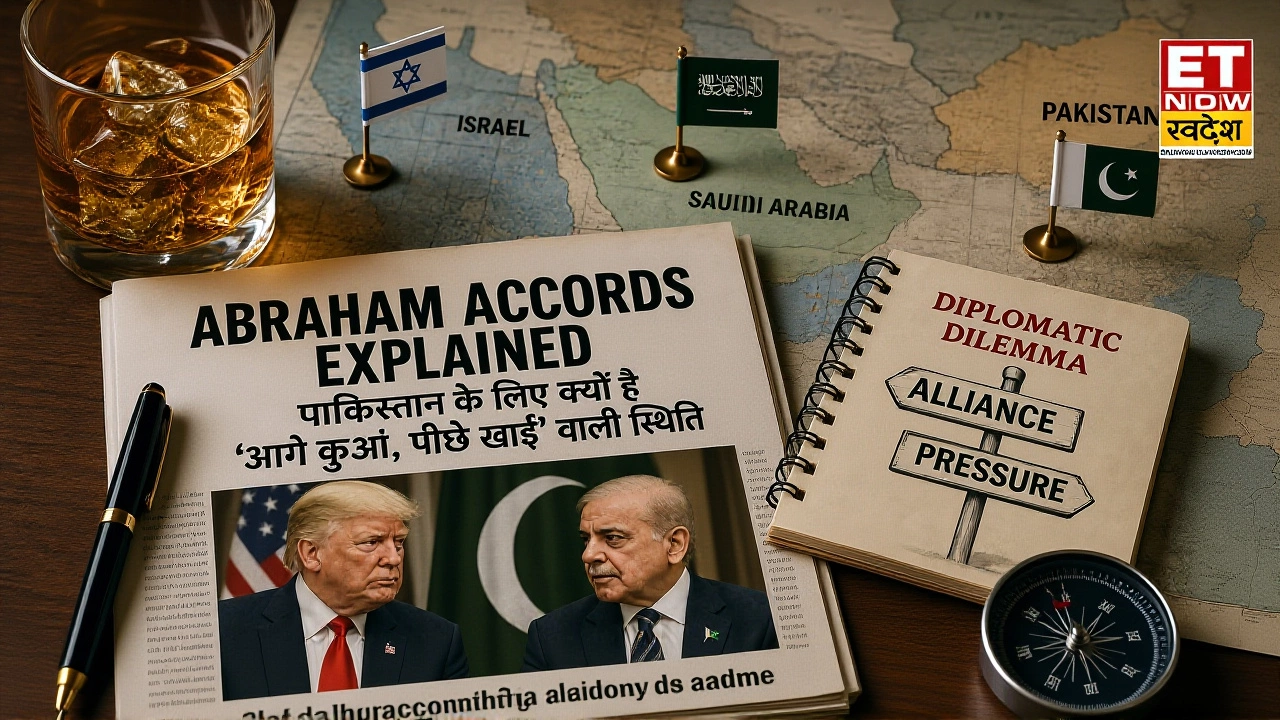
It’s been five years since the world watched a historic handshake on the White House lawn, and the ripple effects are still expanding. The Abraham AccordsWashington, D.C., once hailed as a diplomatic miracle brokered by Donald Trump, 45th President of the United States, have evolved from a symbolic breakthrough into a growing framework for regional realignment. But here’s the twist: the story didn’t end in 2020. In November 2025, Kazakhstan announced it would accede to the agreements, signaling that the push for Arab-Israeli normalization is far from over—even amidst ongoing regional conflicts.
For decades, the idea of Muslim-majority nations openly trading ambassadors with Israel was political suicide. That changed dramatically between September 2020 and January 2021, when the United Arab Emirates, Bahrain, and Morocco signed bilateral deals normalizing relations. Sudan joined the general declaration but remains stuck in negotiations due to internal instability. Now, with Kazakhstan entering the fold, the geographic scope has stretched beyond the Middle East into Central Asia.
A Diplomatic Earthquake in 2020
To understand why this matters, you have to look back at the silence before the storm. Since the 1978 Camp David Accords with Egypt and the 1994 peace treaty with Jordan, no other Arab state had publicly normalized ties with Israel. The Abraham Accords shattered that stagnation. Mediated by the Trump administration, these weren't just handshakes; they were comprehensive treaties covering trade, technology, tourism, and security.
The core document, formally titled the "Abraham Accords Peace Agreement," emphasized mutual understanding and interfaith dialogue. It was named after the biblical patriarch Abraham, shared by Jews, Christians, and Muslims, aiming to highlight common heritage rather than division. For the UAE and Bahrain, the move was pragmatic. They sought closer security cooperation with Washington and direct economic access to Israel’s booming tech sector. For Israel, it meant breaking out of its diplomatic isolation in the region.
The New Players: Morocco, Sudan, and Kazakhstan
The momentum built quickly. Morocco joined in December 2020, gaining U.S. recognition of its sovereignty over Western Sahara in exchange for normalization. This deal highlighted the transactional nature of modern diplomacy—security guarantees and political concessions traded for diplomatic recognition.
Then there’s Sudan. While Khartoum signed the general declaration in late 2020, hoping for removal from the U.S. State Sponsors of Terrorism list and debt relief, it never finalized a bilateral agreement. Ongoing civil conflict and political fragmentation have stalled progress. As of 2025, Sudan remains a signatory in name only, unable to fully implement the accords without a stable government.
The latest development, however, comes from an unexpected quarter. In November 2025, Kazakhstan, a Central Asian nation with a majority-Muslim population, announced its intention to accede to the Abraham Accords. This isn’t just about religion; it’s about economics and geopolitics. Kazakhstan sees value in diversifying its partnerships and tapping into Israeli agricultural and technological expertise. It signals that the "Abraham Accords model" is becoming a template for broader Muslim-world engagement with Israel, extending well beyond the Arab League.
The Shadow of Conflict and Palestine
But let’s be clear: this isn’t a fairy tale. The accords explicitly bypassed the Palestinian issue. Critics argue that by separating normalization from a resolution to the Israeli-Palestinian conflict, the deals undermined the two-state solution. Proponents counter that peace can be built incrementally, not all at once.
The outbreak of war between Israel and Hamas in October 2023 tested this theory. Regional tensions spiked, and several partner states paused high-level visits. Yet, surprisingly, the underlying economic and intelligence cooperation largely held. Experts note that while public rhetoric hardened, private channels remained open. The war may have delayed new signatories, but it hasn’t reversed the existing commitments. Saudi Arabia and Syria have expressed interest in joining, but both remain cautious, waiting for clearer signs of stability and a viable path toward Palestinian statehood.
Economic Ties Deepen Despite Politics
Beneath the headlines, the business case for normalization is strong. Since 2020, trade between Israel and the UAE has surged. Direct flights connect Tel Aviv to Dubai and Abu Dhabi daily. Tech startups from Silicon Wadi are setting up offices in Riyadh and Manama. These aren’t symbolic gestures; they’re multi-billion dollar investments.
Consider the numbers: Bilateral trade between Israel and the UAE reached approximately $1.2 billion in 2023, up from negligible amounts before 2020. Tourism flows have also increased, with thousands of Emirati citizens visiting Israeli historical sites annually. This economic integration creates a vested interest in maintaining peace, even when political winds shift.
What Comes Next?
The trajectory suggests expansion, not contraction. With Kazakhstan’s entry, the network now spans three continents. The question isn’t whether more countries will join, but who and when. Saudi Arabia remains the holy grail for proponents of the accords. A deal with Riyadh would legitimize the framework entirely. However, until the Palestinian question is addressed—or at least managed—Riyadh will likely keep its options open, balancing ties with Israel against domestic and regional public opinion.
For now, the Abraham Accords stand as a testament to the power of pragmatic diplomacy. They haven’t solved every problem in the Middle East, but they’ve redrawn the map. And as Kazakhstan proves, the boundaries of that map are still shifting.
Frequently Asked Questions
Which countries have officially joined the Abraham Accords?
The original signatories were the United Arab Emirates, Bahrain, and Morocco, which signed bilateral normalization agreements in 2020-2021. Sudan signed the general declaration but has not completed bilateral talks due to internal instability. Most recently, Kazakhstan announced its accession in November 2025, expanding the group beyond the Arab world.
Did the Abraham Accords resolve the Israeli-Palestinian conflict?
No, the accords deliberately set aside the Palestinian issue. They focus on bilateral normalization between Israel and specific Arab/Muslim-majority states. While some experts hope this creates pressure for a future resolution, critics argue it undermines the two-state solution by decoupling peace from Palestinian rights.
How did the 2023 war affect the Abraham Accords?
The war caused a temporary chill in public diplomacy and high-level visits. However, underlying economic and security cooperation largely continued. Experts view the conflict as a setback for immediate expansion but believe the long-term trend toward normalization remains intact among current signatories.
Why is Kazakhstan joining the accords?
Kazakhstan’s accession in 2025 is driven by economic and strategic interests. As a Central Asian nation, it seeks to diversify its global partnerships and gain access to Israeli technology, particularly in agriculture and water management. It also aligns with its foreign policy goal of engaging with diverse international blocs.
Is Saudi Arabia likely to join the Abraham Accords?
Saudi Arabia has expressed interest but has not committed. Its decision depends heavily on developments regarding the Palestinian issue and regional security dynamics. Until there is a credible path toward Palestinian statehood or significant concessions, Riyadh is expected to maintain a cautious stance.